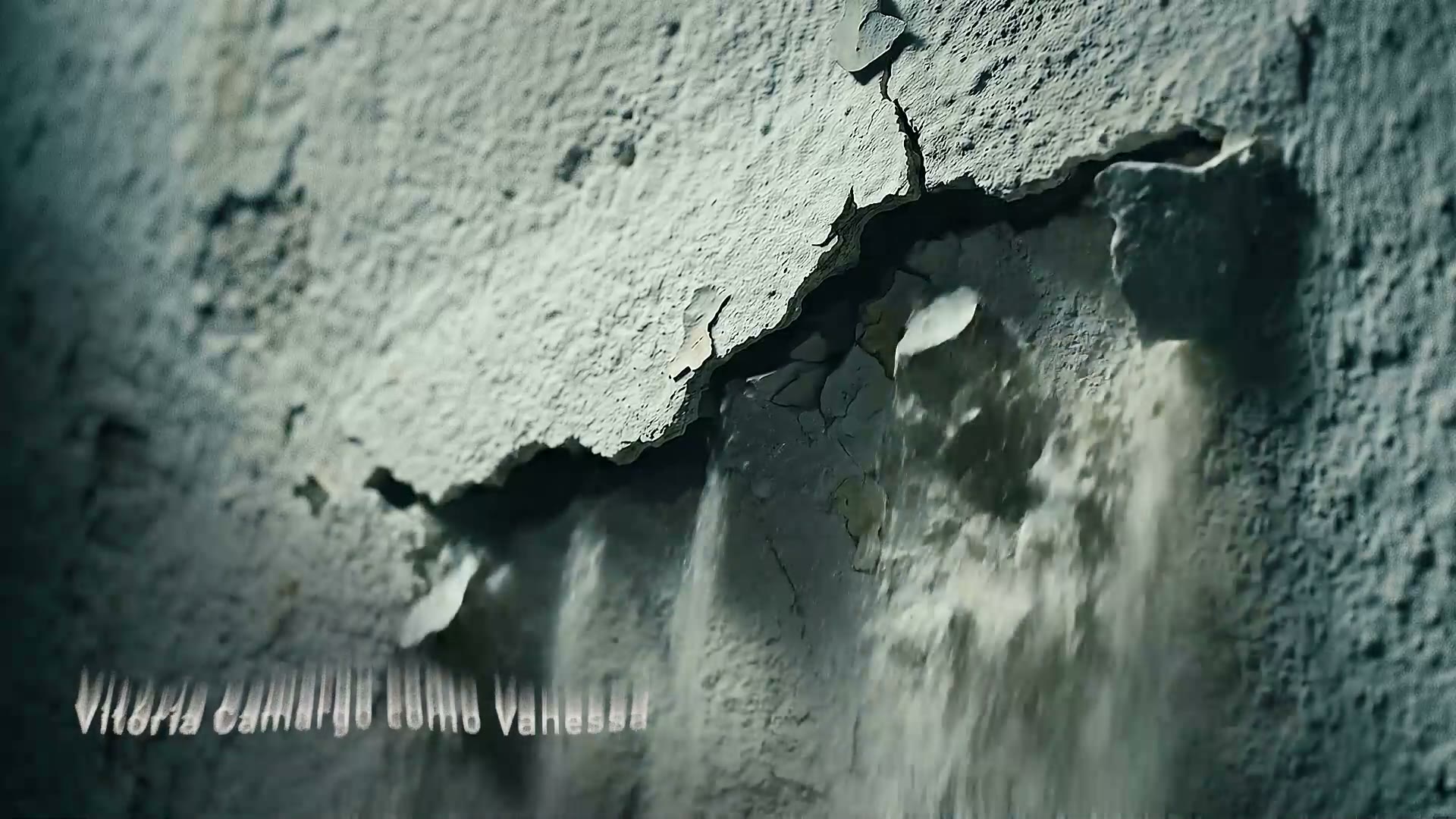
Everything that passed through here left a mark.
A sixty-nine second main title sequence, from concept to logotype. It's the most complete case of the pipeline: twelve plates directed as still images become an entire sequence, with a score and a hand-drawn title card.
The camera never shows the haunting. It shows what the haunting left behind.
Brazilian folk horror told through what was left behind. The opening hands over the evidence before it hands over the ghost: the viewer is invited to read an abandoned house the way you'd read a case file.
One rule decides the entire sequence: never show the presence, only the surface it damaged. Portrait, glass, tape, plaster, photographic paper, wood, salt, floor, emulsion, door. And the rule has a direction — the marks escalate from an intact portrait to the gash that tears through the door.
Each scene is born as a still and resolved before any movement. The turn is in the ninth plate: the photographic emulsion peels off the family portrait and reveals a mark scratched into the plaster — the picture had been hiding it since the first frame.
Drawn, not set in a typeface. The title written on the plaster in the same red the last marks bleed — this is what makes the piece a main title sequence rather than a mood film.
Each surface gets its movement from the already-approved image, and the edit delivers the crescendo in time with the score. Nothing is discovered here — what gets decided in animation is rhythm, not art direction.
The camera never shows the haunting. It shows what the haunting left behind.